A Long Line Back
Ðǿմ«ý alumnus Bob McCollum ’77 is “The Music Doctor,” a man of the mountain who’s devoted his life to giving back to the region in whatever way he can.
His mother and father’s ancestors were early immigrants to the area and hosted some of the earliest surveyors to visit the region.
When McCollum arrived to Ðǿմ«ý, he found means to study his home and its people at new and different depths.
“I particularly liked anthropology with a slant to geography... It was a study of people and their connection to the landscape... I was getting both the physical and the social and the cultural at the same time,” McCollum said.
McCollum graduated with an Earth sciences degree and worked as a teacher, and a member of the job corps before eventually beginning a lengthy scientific career in at the Coweeta Hydrological Laboratory.
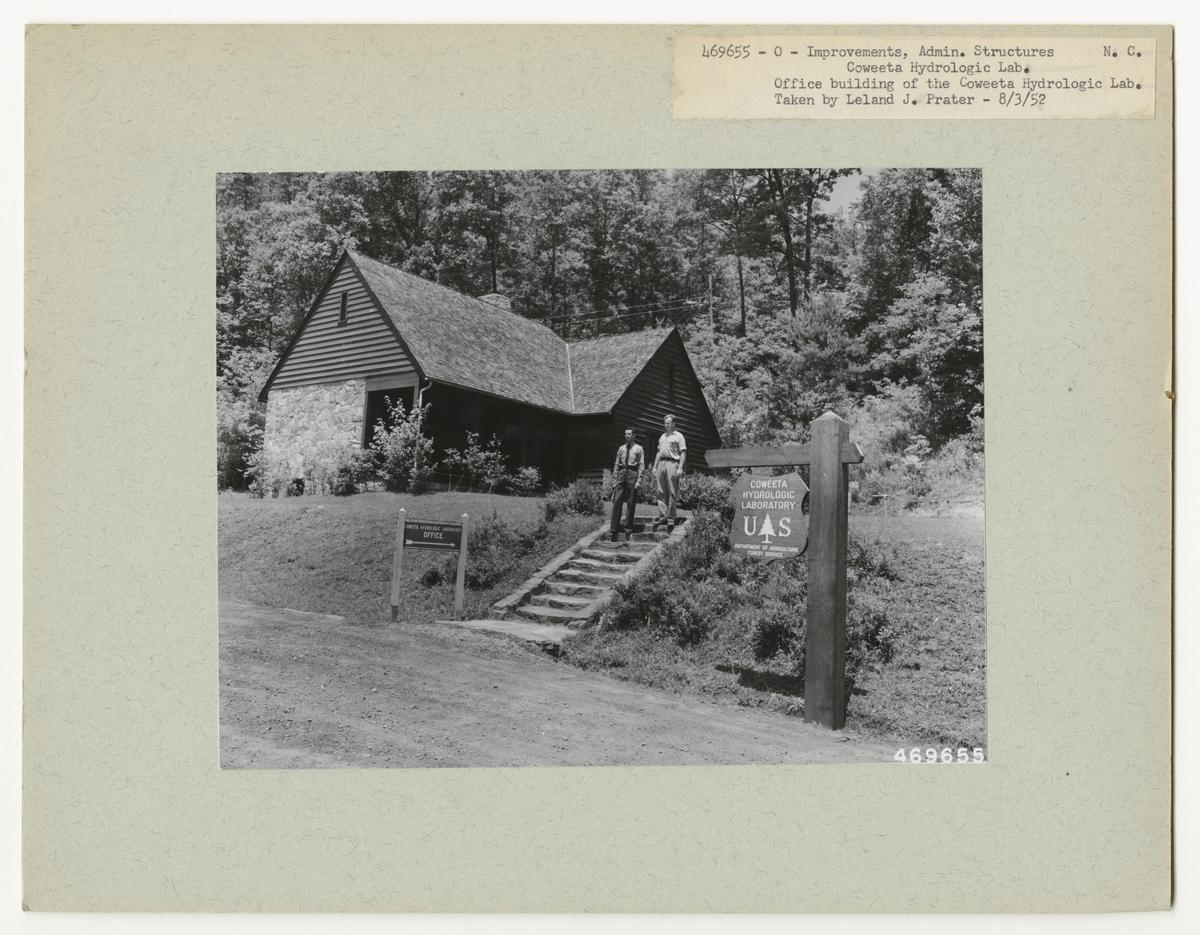
“The laboratory studies the entirety of the water cycle—from atmospheric chemistry to rainfall moving through soils to streams and rivers, then evapotranspiration back into the atmosphere.
“They sampled rainfall, groundwater wells, stream water, and we ran those through analyses for positive and negative ions and nutrients—specifically those that feed plants and biota in streams. We also did that for soils—soil productivity, minerals, things like calcium, potassium, magnesium, phosphate—all the things that feed plant communities,” McCollum said.
But in just six months’ time, McCollum’s expertise was asked elsewhere.
A professor with the Odum School of Ecology at the University of Georgia, who was collaborating with the scientists at Coweeta to study forested watersheds, approached McCollum’s boss for help.
“This professor was doing co-op work with us studying forested watersheds, but no one had ever studied agricultural watersheds the same way,” McCollum said. “He had a connection in South Georgia at a place near Tifton called Abraham Baldwin Agricultural College.
“He was doing work there with the federal watershed unit, and they wanted somebody to go down there and create a laboratory just like ours—to study the same chemical profiles for soils, water, and everything else.”
McCollum’s boss recommended him for the job, and in no time at all he was moving south, drawing the designs for what is now the Southeastern Watershed Research Unit. He spent the better part of five years in the area getting the operation in motion. He also learned to tune pianos and started a country band; McCollum has always been a musician at heart, and plays often today.
When he finally moved back he was fortunate to be able to continue his work at Coweeta, where he’d be for the next 28-and-a-half years.
While working as a scientist in the mountains, McCollum observed the impact of environmental policy and legislation like the Clean Air Act. He described seeing the ozone concentration diminish and rainfall acidity reduced.
It also instilled in him a deep respect for what’s beyond our ability to study and how scholars benefit from interdisciplinary research.
“Here’s the big thing that I learned in science: we don’t know nothing. I can’t say that enough. For all that we think we know, there’s a whole level of function in the environment that we don’t have a grip on yet,” McCollum said.
Taking account of all that McCollum has done to preserve the cultural and natural heritage of western North Carolina is a difficult task. Over the years, he has become one of Macon County’s most active civic leaders and historical preservation advocates.
For a time, McCollum represented North Carolinians as co-chair of the 11th Congressional District. He was also a delegate of the Democratic National Convention in Charlotte in 2012.
McCollum was appointed by Gov. Jim Hunt to the North Carolina National Parks, Parkway and Forests Development Council board, where he served for 12 years, and spearheaded the effort that inspired North Carolina’s first specialty conservation license plate and advocated for the establishment of Gorges State Park.
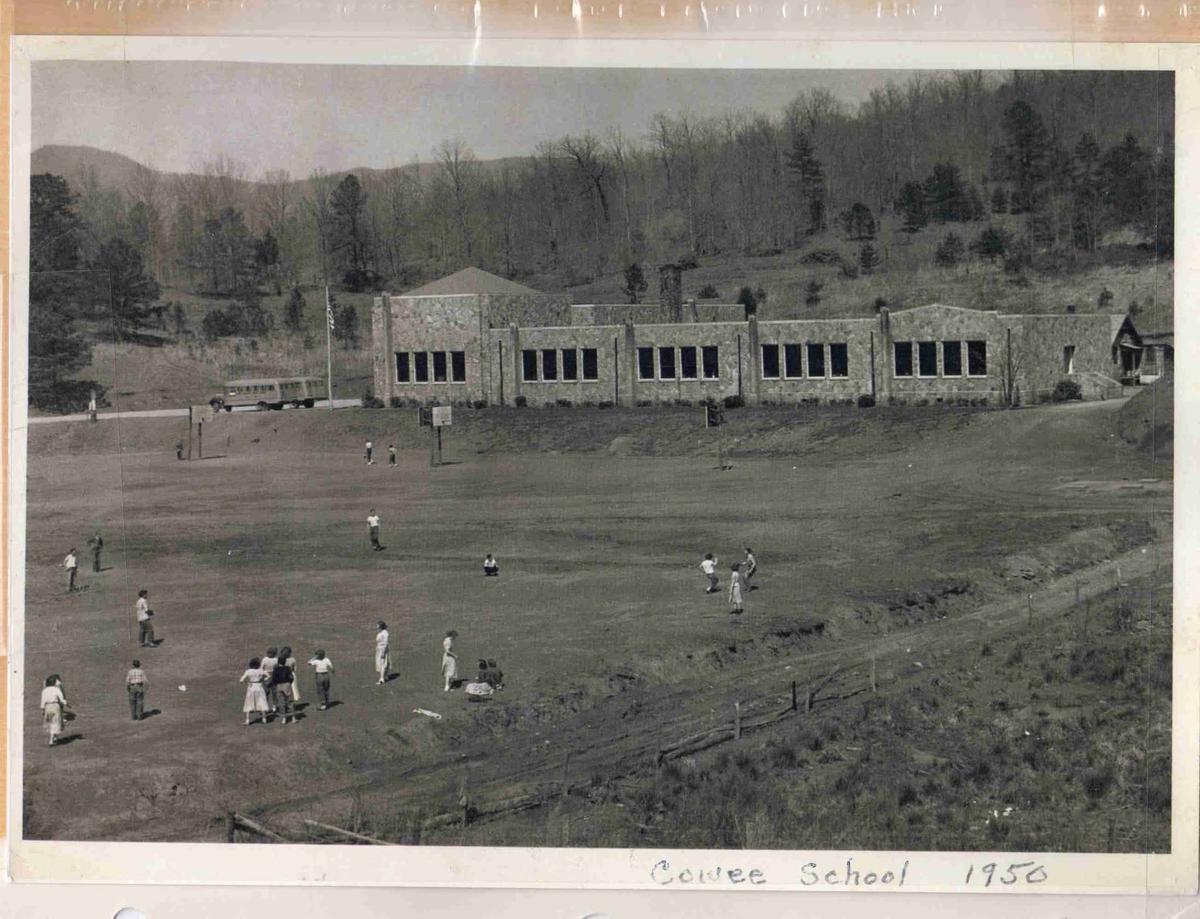
Two more recent accomplishments shine especially in McCollum’s memory. Since 2010, he and a team of area residents have banded together to preserve and revitalize the Cowee School Arts and Heritage Center, a titanic effort that has completely transformed what was once a camp of the Civilian Conservation Corps space into a laboratory for local artisans, artists, entrepreneurs and educators.
It’s through this endeavor as well that McCollum became acquainted with fellow alumnus Stacy Guffey, current mayor of the town of Franklin.
“Most all of our board members were longtime residents. Their families had been there, not unlike Stacy and I, and there was that connection to the history and the heritage here that we wanted to see preserved,” McCollum said. “It’s hard to put your finger on it. It encompasses everything from buck dancing to whiskey making to quilting, and it’s just the whole thing. We try to touch on all of that, at one time or another, with our programming at the school.”
With the support of local government “champions,” to use McCollum’s words, and plenty of his own elbow grease, the project was a major success.
"One of the things I’m most pleased about is that local people love it. We had just under 15,000 visits to the school last year. Now, a lot of them are repetitive because they’re taking classes there. But having 15,000 people come in, that’s a big thing,” McCollum said.
“Once they’re exposed to the school, I hear this over and over again, ‘We are so glad this school is here.’ I have never lived in a place where there was this sense of community and a gathering place with a variety of things to do, and they’re just thrilled,” McCollum said.
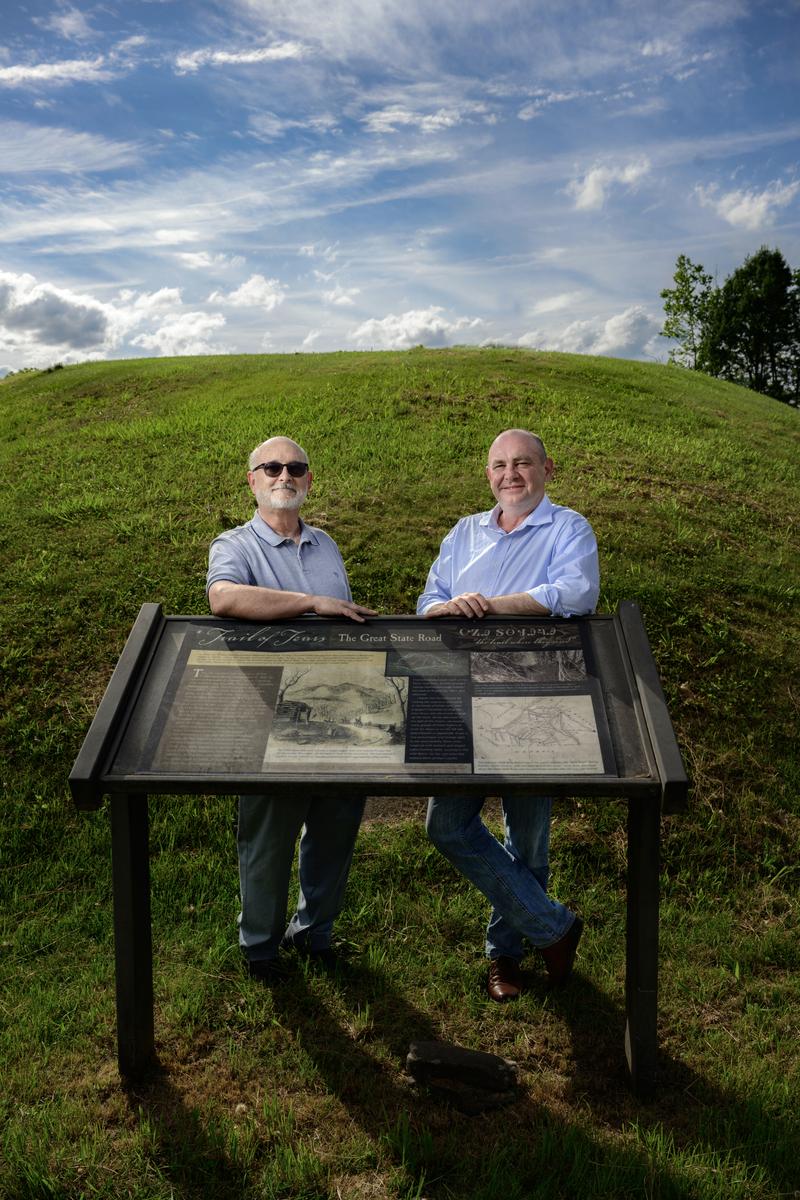
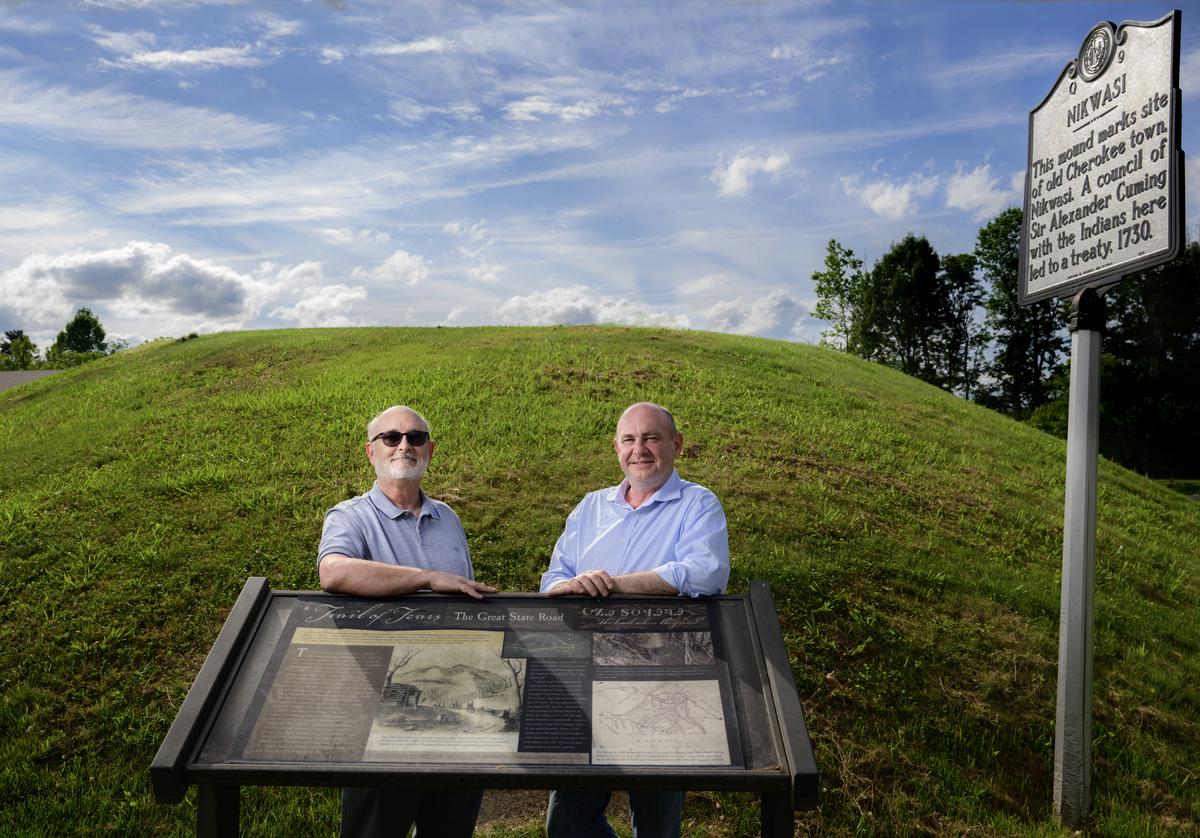
The more recent return of the Nikwasi Mound to the Eastern Band of Cherokee Indians was another especially proud moment for McCollum as the culmination of two years of hard work alongside Guffey to educate their fellow community members, collaborate with native partners and advocate for the transfer in the halls of local government.
It wasn’t about doing it fast, but doing it right, and ensuring that the deed transfer was legally enshrined and protected forever.
“It was very emotional. Very emotional,” McCollum said. “I felt a lot of personal pride in being able to help that process along. And there was Stacy sitting at the table with me. The Chief was there. Juanita (Wilson) was there. We were the deed signers. It was a powerful moment.”
When asked about his drive to participate in these numerous projects, McCollum describes the sense as the natural fruition of his life and upbringing in the mountains.
“It’s just something in me that said: ‘Yes, that’s where I need to direct my time.’ All of those things from my past kind of came together. Here I am working with the Cherokee, whose success and welfare were tied to this land long before my ancestors arrived.
“Then there’s my education. One thing the Cherokee really respect is water and land. They still stress that because that’s what sustained them. They recognize it, and they revere it. I wish I could take that passion and give it to the rest of the world.
“I think America, in particular, is missing something. We jumped from frontier life straight into industrialization. We don’t have that long cultural continuity that creates deep appreciation for place.
“So it all kind of came together for me. When opportunities came up and people said, ‘What do you think about this?’ It felt natural.”
For students hoping to emulate McCollum’s example of activism and leading their own efforts in the future, he had this to share.
“Pay attention to the world around you. Pay attention to the details. It’s easy to pass over the things that are really important. People want to get from Point A to Point B as fast as possible, and they skip the details that have to be attended to if a project is going to succeed.”